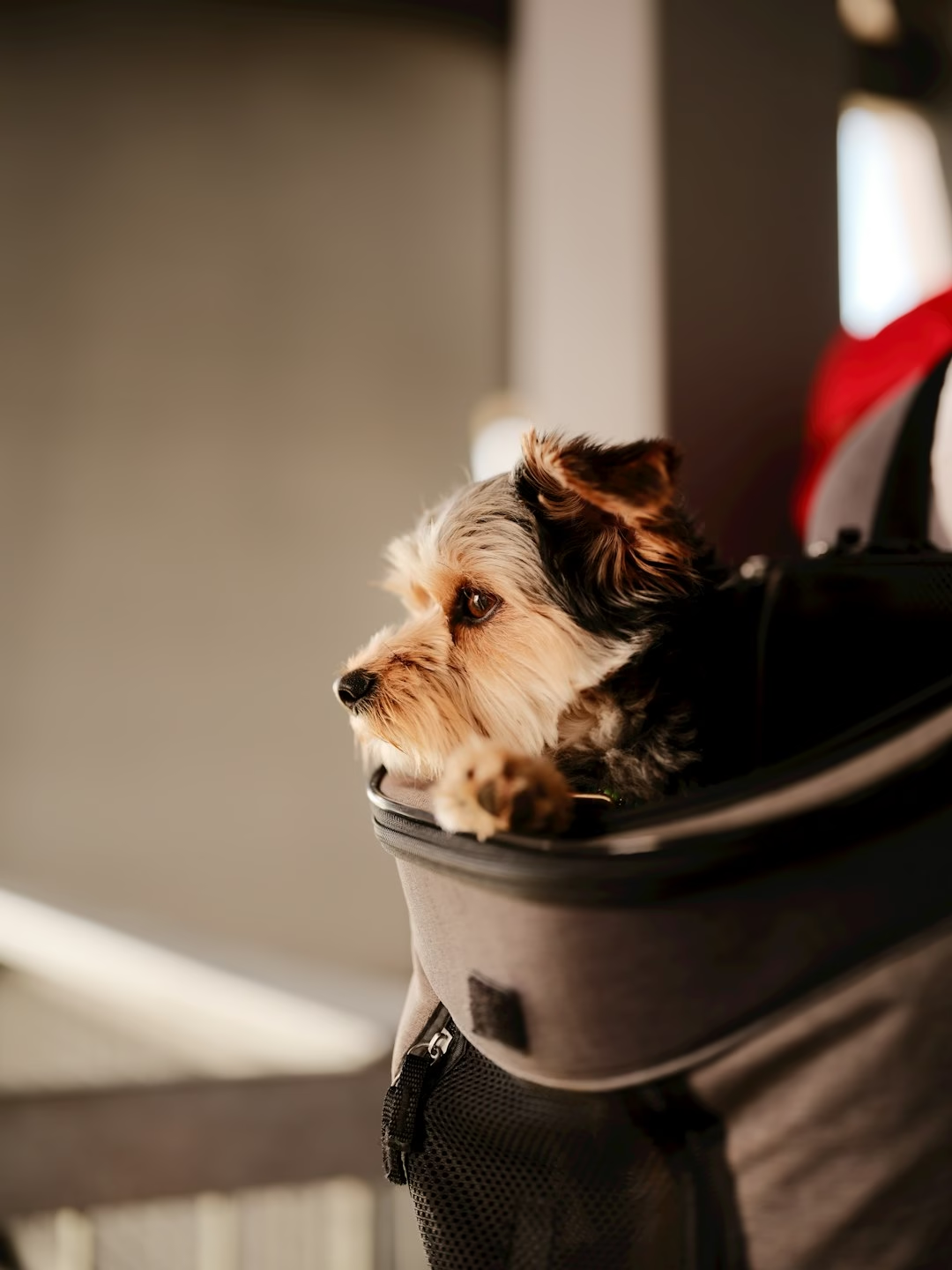


Small-dog travel has a special kind of magic: the tiny paws, the zipped carrier, the way a ten-pound companion can turn a long trip into something gentler. This week’s advisory is simple and important: after reviewing the official U.S. travel pages listed below, I did not identify any major new federal pet-travel rule changes, recalls, or safety alerts published within the last seven days that specifically alter planning for small dogs under 10 pounds. That means the smartest move is still careful verification—because pet rules can shift by route, carrier, state, airport, and destination country.
Published: August 21st, 2026
This week’s travel update
No major verified changes were identified this week on the official pages reviewed for U.S. pet travel, TSA screening, DOT air-travel guidance, CDC dog import guidance, USDA APHIS pet-travel pages, or the State Department’s pet-travel guidance: USDA APHIS Pet Travel, USDA APHIS State-to-State Pet Requirements, CDC Dog Travel, CDC Pet Travel Safety, TSA traveling with pets, U.S. DOT flying with a pet, and U.S. Department of State pets. If you are traveling with a small dog, the practical takeaway is unchanged: verify the rules for your exact route before you buy the ticket, book the cabin space, or drive to the border.
Destination-by-destination and transportation-by-transportation breakdown
Flying with a small dog
Air travel is where small dogs under 10 pounds most often fit best, but only if the airline allows them in the cabin and the carrier fits under the seat. The TSA explains how pets are screened at security and reminds travelers that animals must be removed from carriers only when directed by the officer during screening (TSA traveling with pets). The DOT advises travelers to confirm the airline’s exact pet policy, including cabin rules, fees, carrier dimensions, and any limits on routes or aircraft (DOT flying with a pet). Do not assume every airline treats small dogs the same way; some require advance reservations, and some restrict pet travel in extreme heat or cold.
Also remember that service dogs are not the same as pets, and emotional-support-animal rules are not the same as either. If your dog is a pet, follow the airline’s pet policy, not the service-animal policy. For international flights, check the destination country’s official entry rules, the USDA APHIS pet-travel guidance (USDA APHIS Pet Travel), the CDC dog travel pages (CDC dog travel), and the State Department’s pet guidance (State Department pets).
Driving across state lines
For road trips, a small dog can travel more comfortably in a secure carrier or with a properly fitted restraint, but the destination still matters. Some states, territories, parks, and local jurisdictions can have specific animal-entry rules, leash laws, or quarantine requirements, so the USDA state-to-state page is a useful starting point (USDA APHIS state-to-state pet requirements). Before you leave, confirm pet policies for hotels, vacation rentals, beaches, trailheads, and rest stops. A warm blanket in a winter cabin, or a cooling mat in a summer car, can make a huge difference for a small body with a small margin for error.
Trains, ferries, and other carriers
Railways, ferries, and cruise lines set their own pet rules, and those rules can change without notice. For a dog under 10 pounds, the key questions are cabin access, carrier size, boarding location, vaccination proof, and any limit on how many pets are allowed per trip. Check the official operator website directly before travel. If the route includes a border crossing or port inspection, build in extra time for document review.
Practical checklist for preparing a small dog
Think of the carrier as your dog’s travel den. It should be sturdy, well ventilated, and familiar enough that your dog does not meet it for the first time at the airport gate. Pack a soft absorbent pad, a leash, a collar with an ID tag, proof of rabies vaccination if required, copies of health certificates if needed, and any medications in their original containers. Keep your dog’s microchip number and registration information handy. Offer a light meal before travel, but ask your veterinarian whether your dog should fast or eat normally for motion-sickness prevention.
Documents and timing
Many trips require more than one document, and the timing can matter. Health certificates may need to be issued within a specific window before departure. Some destinations require a microchip, rabies vaccination, parasite treatment, or government endorsement before arrival. Others require re-entry paperwork if you are returning to the United States. Check the destination country, your airline, and the USDA APHIS, CDC, CBP, and State Department pages well before travel, then check them again close to departure.
Comfort and safety on the road
Small dogs can chill quickly in air-conditioned cabins and overheat quickly in parked cars, sunny terminals, or dense crowds. Keep water available, offer quiet rest breaks, and never leave a dog in a vehicle. If your dog is anxious, practice short carrier sessions at home, bring a favorite blanket, and ask your veterinarian whether a travel plan for nausea or anxiety makes sense. For puppies, seniors, and dogs with heart, respiratory, or mobility issues, a pre-trip veterinary conversation is especially important.
Fun facts for dog travelers
Small dogs may be tiny, but their senses are not. A dog’s sense of smell is far stronger than a human’s, which is one reason familiar bedding or a favorite toy can help a travel day feel less strange. Many dogs also take cues from their humans’ tone and body language, so calm packing and steady routines often matter more than we realize. And while tiny dogs can be easier to lift, their size does not make them automatically easier travelers—some are more sensitive to temperature swings, noise, and long days.
What dog owners should do now
- Check the exact airline, train, ferry, cruise, hotel, or park policy for your route.
- Confirm whether your dog is traveling as a pet, service dog, or another category with different rules.
- Review the official U.S. guidance pages and your destination’s government website before you book.
- Ask your veterinarian about vaccines, certificates, motion sickness, hydration, and temperature safety.
- Carry printed and digital copies of every required document.
- Build extra time into your itinerary for screening, rest breaks, and unexpected inspections.
When a small dog travels well, the whole journey feels softer, calmer, and more humane. The secret is not luck; it is preparation, patience, and checking the official rules one more time before you roll the carrier to the door.
Educational content only. This advisory is not a substitute for veterinary, legal, immigration, or official government guidance.
Related Posts