
This week’s travel update is simple and important: in the official sources reviewed for the previous seven calendar days, there were no major verified new restrictions, recalls, or urgent safety alerts that changed the core planning rules for small dogs under 10 pounds. That means the smartest move is still the same one—verify every step with the carrier, destination authority, and your veterinarian before you go. For the standing guidance that matters most, start with the official pages from USDA APHIS Pet Travel, USDA APHIS State-to-State Pet Requirements, CDC Dog Travel, CDC Pet Travel Safety, TSA traveling pets guidance, and U.S. Department of Transportation flying with pets guidance.
Transportation-by-transportation breakdown
Air travel
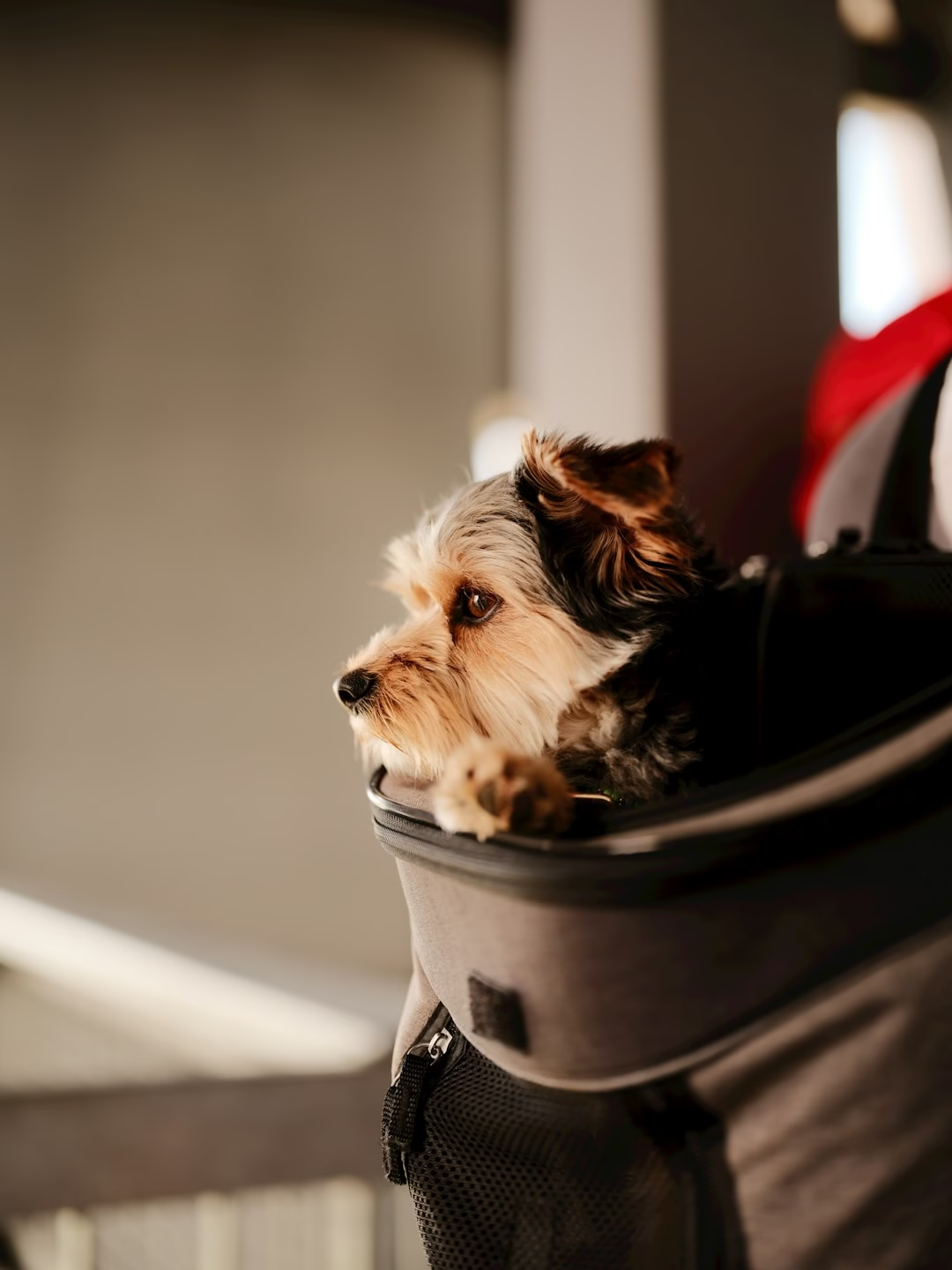
For a tiny traveler, cabin travel is often the most comfortable option, but it is never automatic. Airlines set their own rules for in-cabin pets, carrier dimensions, fees, reservation limits, breed restrictions, and temperature-related restrictions. The federal guidance from the U.S. Department of Transportation and the security screening notes at TSA are useful starting points, but the airline’s current policy is the rule that matters at the airport. A small dog under 10 pounds may still be denied boarding if the carrier is too large, the cabin inventory is full, or the route has seasonal restrictions.
What to confirm with the airline
Check whether the dog must stay fully inside an airline-approved soft-sided carrier, whether the carrier counts toward the carry-on limit, whether a health certificate is required, and whether the carrier must fit under the seat in front of you. If your dog is traveling as a pet, remember that pet rules are not the same as service dog rules, and emotional-support animals are generally treated differently from trained service dogs. Never assume one airline’s policy matches another carrier’s policy.
International travel
International trips demand extra patience and paperwork. Before booking, verify the destination country’s rules, the transit-country rules if you have a layover, and the return requirements for coming back home. The most reliable places to check are CDC Dog Travel, USDA APHIS Pet Travel, U.S. Department of State pet guidance, the destination government’s official website, and U.S. Customs and Border Protection for re-entry considerations. Many countries require proof of rabies vaccination, a microchip, an official health certificate, parasite treatment, or a waiting period before arrival. For a small dog, the weight may help with cabin eligibility, but it does not remove documentation requirements.
Road trips, rail, ferries, hotels, and parks
For domestic travel, the safest habit is to check the destination state or territory before you leave, using the USDA’s state-to-state pet requirements page as a reference point. Cities, counties, national parks, ferries, and hotels may add their own rules. Some parks limit pets on trails, at beaches, in shuttles, or inside visitor buildings. Rail and ferry operators often set separate carrier-size limits, ticketing rules, and breed policies. A small dog can be easier to bring along, but every leg of the journey still needs a fresh review.
Practical checklist for a small dog under 10 pounds
Before you book
Measure your dog’s carrier carefully, and do not guess. Reserve your pet spot as soon as possible, because many carriers limit the number of animals allowed in the cabin. Ask your veterinarian whether your dog is fit for the trip, especially if your pet is very young, senior, brachycephalic, anxious, or prone to motion sickness. If the route involves heat, cold, or altitude, check whether that changes the plan.
Seven days to twenty-four hours before departure
Gather every required document early: vaccination records, rabies certificate if needed, microchip information, health certificate, and any destination forms. Confirm the timing rules, because some certificates are only valid for a short window before travel. Recheck the airline’s pet page, the destination’s official entry page, and the return-entry rules if you are traveling internationally. Pack a familiar blanket or toy, but keep the carrier clean, secure, and easy to inspect.
Day-of-travel habits that help
Give a light meal unless your veterinarian says otherwise, and avoid a full belly right before takeoff or a long car ride. Offer small sips of water, and use rest stops for leash walks whenever the travel method allows. Keep ID tags on the collar, and make sure the microchip registration is current. For a nervous little dog, calm routines matter more than dramatic reassurance: quiet voice, steady handling, and a familiar scent can make a crowded terminal feel less overwhelming.
Safe travel tips for weather, motion, and stress
Small dogs lose heat and tire faster than larger dogs, so think in short, careful steps. In warm weather, protect against overheating by avoiding hot pavement, parked cars, and long outdoor waits. In cold weather, use a coat only if your dog needs one and never leave a pet unattended in freezing conditions. If your dog gets carsick or nervous, talk to your veterinarian before the trip about the safest way to manage nausea or anxiety. During flights, keep the carrier stable, calm, and ventilated, and make sure your dog can stand, turn, and lie down comfortably within the allowed dimensions.
Fun facts for dog travelers
Small dogs may fit travel carriers more easily, but they still need the same careful planning as bigger dogs. Dogs rely heavily on scent, so a familiar blanket or shirt can be comforting in a new place. Many small dogs do best with frequent pauses, because tiny bodies can get cold, thirsty, or overstimulated faster than people expect. And while a compact pup can be wonderfully portable, the gentlest journeys are usually the ones built around routine, patience, and plenty of rest.
What dog owners should do now
Check the official airline rules for your exact route; confirm destination entry or state requirements; book a veterinarian visit if your trip needs a health certificate or updated vaccines; verify carrier size and reservation limits; review heat and temperature restrictions; and keep your dog’s ID, microchip registration, and emergency contact information current. If you are uncertain about any leg of the trip, stop and ask the authority that actually controls that leg—airline, border agency, park service, ferry operator, hotel, or veterinarian—before you leave.
Traveling with a tiny dog can feel like carrying a little piece of home through the world, but it works best when every rule is checked, every document is ready, and every comfort item is chosen with care.
Educational content only. This advisory is not a substitute for veterinary, legal, immigration, or official government guidance.

Related Posts